What Makes People Lash Out?
Do you believe in the inherent goodness of human nature?
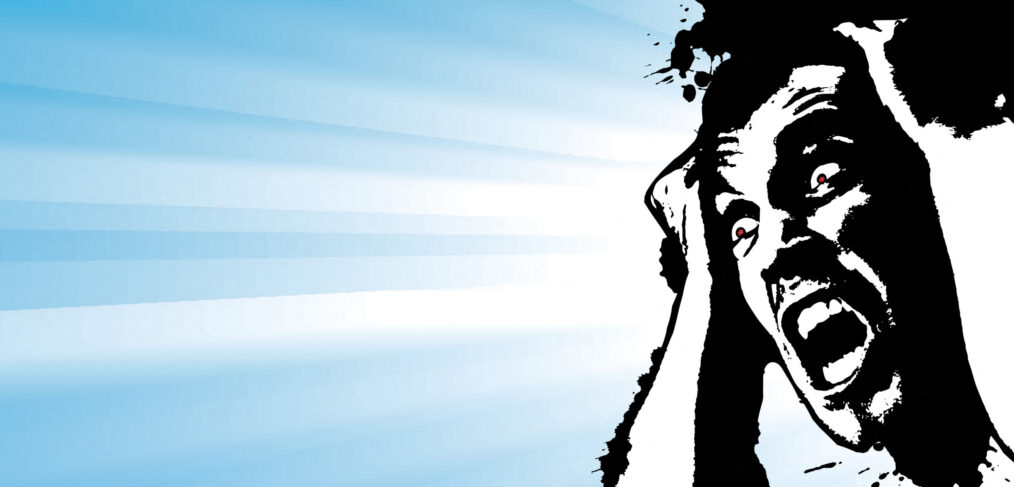
If your only contact with people were face-to-face in calm, nonstressful situations, you might conclude that people are generally friendly, polite, and generous. But when certain social dynamics enter the picture, you might come to a very different conclusion. Under particular circumstances, people can seem to lose their empathy, emotional intelligence, and ability to regulate themselves. They lash out. They become harsh, insulting, or even cruel.
Why does this happen? How does a person who is normally kind and polite suddenly act like a bully?
Traffic
Perhaps the most common examples of this shift in behavior are aggressive driving and rude interactions in traffic. My own experience driving in the Baltimore area is that people have become increasingly impatient, insensitive, and reckless. A recent study [1] published in the Journal of Safety Research found that aggressive driving is correlated with difficulty self-regulating and with emotional dysregulation.
Self-regulation is the capacity to recognize your thoughts and emotions, evaluate them, and choose your response rather than simply reacting. Imagine another driver suddenly merges into your lane. A person with strong self-regulation might think:
- “That startled me.”
- “Maybe they didn’t see me.”
- “I’m angry, but I don’t need to act on it.”
- “It’s not worth risking an accident.”
The anger is real, but it does not dictate the behavior.
Sports Fans
My family went to a baseball game last weekend, and what struck me was not how loud people were, but how rude and insulting some of the shouting became. A group of teenage boys, along with someone I assumed was the father of one of them, picked out a person in the dugout and spent the whole game yelling taunts and insults at him. It was likely not something they would dream of doing if they encountered that person face-to-face.
One might argue that professional athletes and coaches accept a certain amount of public criticism when they enter professional sports. But to me, that doesn’t explain the motivation of people who seem to delight in shouting hurtful and offensive comments at another human being. Even my progressive and empathetic son sometimes seems to lose a portion of his usual empathy and kindness when he is at a baseball game.
Societal Trends
Recent societal trends, reflected in our current political environment, have normalized bullying, callousness, xenophobia, and derogation. Much of this likely stems from the perception among some people that their status, security, or cultural standing has been diminished by increasing diversity in the United States.
One study [2] describes this effect as being largely driven by a perceived threat to the status of groups that have traditionally held economic, cultural, or political power. The authors write that “…[the] status threat felt by the dwindling proportion of traditionally high-status Americans (i.e., whites, Christians, and men) as well as by those who perceive America’s global dominance as threatened combined to increase support for the candidate who emphasized reestablishing status hierarchies of the past.” This dynamic, combined with questionable and biased sources of information, has contributed to a perfect storm of divisiveness in our country.
It is easy to conclude from these trends that people have been diminished by what they are suffering, or by what they perceive themselves to be suffering. But if we think of these behaviors as partly rooted in perceived threat, fear, resentment, and the information people consume, we may not necessarily conclude that everyone who acts this way is inherently bad (although some people certainly are).
If there is any hope of moving beyond the current political climate and the perspectives of those who have embraced it, we need to understand why people believe what they believe and why they do what they do. This does not mean accepting bigoted, chauvinistic, or nativist views. It means recognizing that some people have been misled, manipulated, or frightened into defending themselves against threats that may be exaggerated, distorted, or untrue.
People are not simply good or bad, but words and actions can be. Understanding the motivations behind harmful words and actions can help us respond more wisely. It may also help our society move back toward compassion, kindness, and inclusion.
Artwork by Domen Colja.
~~~
The work and research I put into this Substack Page are entirely reader-supported. If you enjoy the content I provide and are not ready to become a paid subscriber, you can simply make a one-time donation here at Buy Me a Coffee, if you are inclined. I appreciate all of you who follow this page, and the community we’ve developed.

Love, S., & Nicolls, M. (2025). What drives road rage? A systematic review on the psychological correlates of aggressive driving behavior. Journal of Safety Research, 94, 92–109.
Mutz, D.C. (2018) “Status Threat, Not Economic Hardship, Explains the 2016 Presidential Vote” — Diana C. Mutz, University of Pennsylvania, published in Proceedings of the National Academy of Sciences (PNAS).