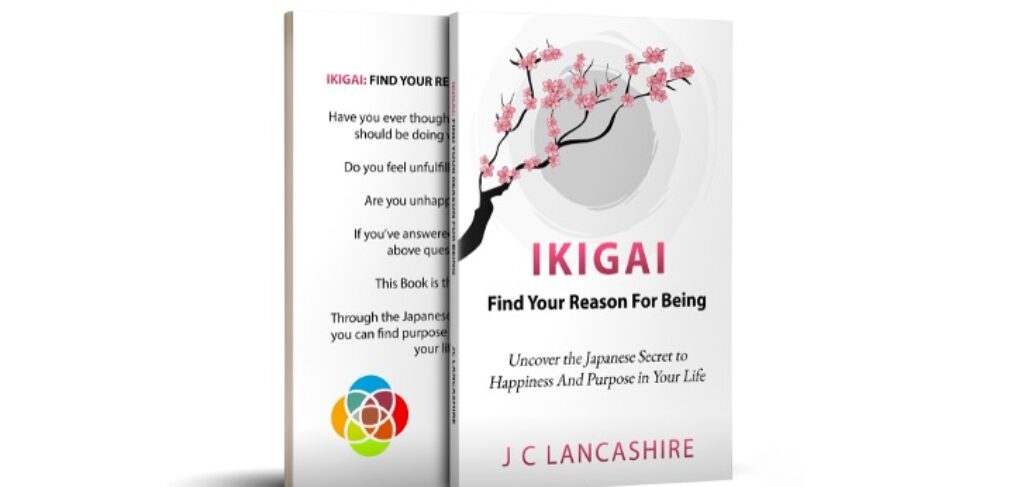
Ikigai—Find Your Reason For Being: A Review
Fulfillment and finding one’s purpose in life are common themes in this blog and in my own life. When I saw Ikigai—Find Your Reason for Being: Uncover the Japanese Secret to Happiness and Purpose in Your Life by John Lancashire, I was immediately intrigued and wanted to know more about the concept, which has been part of Japanese culture for centuries.
Before diving into applications of the concept, I wanted to understand more specifically what Ikigai means and where it came from. Chapter One provides a solid introduction to the term and its history, including instances in Japanese history when it was prevalent and the contextual reasons for its prevalence. The word itself combines the Japanese words iki, meaning life or being alive, and kai, referring to result, benefit, worth, or value. In its simplest sense, Ikigai is what makes life worth living—our reason for being.
There are many ways to think about fulfillment and one’s reason for being, and Lancashire makes an important distinction between focusing on avoiding pain and attaining pleasure (hedonic well-being) and pursuing self-realization and a sense of purpose (eudaimonic well-being). Ikigai is much more closely aligned with the latter.
Ikigai may at first seem overwhelming in its significance. How do you answer the big question, “What gives your life meaning and purpose?” But Lancashire makes clear up front that people can find Ikigai in any aspect of life—anything that gives them a reason for being. I also like that the book doesn’t proceed under the assumption that Ikigai is the only philosophy related to purpose and fulfillment. It discusses Hygge, Lagom, Gezellig, and Ubuntu, all of which differ in context and approach but share the ultimate goal of helping people live better, more contented lives.
Chapter Two delves into the specifics of Ikigai. It begins with four main elements: what you love, what you’re good at, what the world needs, and what you can be paid for. I like that these elements are presented graphically, making the concept easier to visualize. Looking at the diagram gives a sense of how each element contributes to Ikigai. The book then provides a short list of questions for each one to help you understand how it applies to your own life.
A reader could spend a significant amount of time on these questions. It’s not that the list is long; it’s that the questions are deep. Answering them takes reflection and self-honesty. These few pages are among the most important and helpful I’ve read on the topic of self-knowledge.
Another important point is that Ikigai isn’t necessarily something you discover once and then possess for the rest of your life. Lancashire emphasizes that it can change as your circumstances, priorities, and stage of life change. A career that provides Ikigai at one point, for example, may no longer do so after retirement. This makes Ikigai less of a destination than an ongoing process of understanding yourself and periodically reconsidering what gives your life meaning.
I am often wary of overpromises about the benefits of any philosophy or approach, but rather than making me skeptical, the way Lancashire describes the potential benefits of Ikigai made me interested in exploring it further. Some of the benefits might seem obvious. If you do what you love, are good at it, help the world, and can make a living from it, happiness seems like it should follow. And the idea that living with greater purpose could reduce stress and its effects, support health and longevity, and increase inspiration and motivation makes intuitive sense given the nature of Ikigai’s elements.
In Chapter Three, Lancashire helps the reader understand what passion means in the context of Ikigai by comparing it with hobbies. While hobbies are enjoyable and help us pass the time, passions have a place in our hearts and excite and motivate us to spend significant time pursuing them. He follows this with a broad range of ideas to help readers identify and explore their passions. The suggestions span everything from meditation and mindfulness to engaging with like-minded people, journaling, and even creating a “passion jar.” Not everything on the list will be effective for everyone, but most readers will likely find something that resonates with them.
Playing to your strengths, one of the four cornerstones of Ikigai, is also key to successfully applying the approach. Most of us have passions we would have loved to explore further, only to find, to our dismay, that we’re not particularly good at them. That doesn’t mean the passion is misplaced. For example, when I was young, I wanted to be a baseball player. I was passionate about all aspects of the sport. But I hit my peak in college, and that was it. Baseball continues to be a passion, but now I engage with it as a fan and student of the game. To identify your Ikigai, you have to look for the places where passion intersects with the other elements of the framework.
Lancashire provides a wealth of ideas for finding activities that inspire passion while also playing to one’s strengths. These range from what some might consider more obvious approaches, such as developing self-awareness and reflecting on past experiences, to self-assessments and asking those around you for their perspectives—something that might be uncomfortable for some people. Lancashire also discusses the need to balance productivity with feasibility so you don’t become overwhelmed and lose sight of your passion and vision.
I write about the “essential self” and its associated core values with regularity, so Lancashire’s description of aligning your Ikigai with your core values really resonated with me. Listing your core values and looking for alignment with your Ikigai helps ensure that what you pursue feels right and is consistent with who you are. Alignment with core values is discussed alongside contributing to the community, and this is one of the things that makes Ikigai so compelling: the integration of what resonates with the self and what contributes to the world around us.
Identifying a passion that plays to your strengths and aligns with your core values is only part of the challenge. In Chapter Six, Lancashire addresses what is perhaps the most daunting part of the process: finding a profession that incorporates your Ikigai. This involves balancing financial practicality with your passions and strengths. Like the other steps in identifying your Ikigai, this requires a rigorous process that includes self-assessment, researching career possibilities, reflecting on your experiences, and setting clear goals. Taking these steps while integrating your strengths and passions makes it much more likely that you’ll find a career aligned with your Ikigai.
Lancashire also notes the importance of finding balance and managing your time in a way that supports happiness. If your passion is also your job, maintaining a healthy work-life balance can be difficult, especially with the prevalence of remote work. Being intentional about setting appropriate boundaries can help you protect time with family and for yourself while still allowing you to achieve your professional goals.
In Chapter Seven, Lancashire explores the broader benefits of incorporating Ikigai into everyday life. These include improved relationships, better health and well-being, and a greater ability to live in the moment. He also discusses several elements of life that align naturally with the Ikigai approach, including spirituality, serving a higher purpose, and gratitude.
One of the most attractive aspects of Ikigai to me is the intentionality inherent in it. My writing often has an undercurrent of intentionality, so this approach really resonates with me. Ikigai asks us not simply to discover what makes us happy, but to examine why we spend our time as we do and whether those choices reflect what matters most to us.
When people think about the career they want—or about changing their current career—it’s easy to fall into the “lots of money will make me happy” trap. Lancashire explains the problem with this in compelling terms. You have to make a living, so practicality is part of Ikigai, but income alone is not enough. He also emphasizes that the journey toward finding your Ikigai should itself be enjoyable. In other words, focus on the journey, not just the destination.
Ikigai is therefore not simply an exercise in identifying something you’re passionate about, are good at, that helps the world, and that provides a living. To truly live your Ikigai, you have to create a lifestyle conducive to it. In Chapter Eight, Lancashire walks through some of the elements of such a lifestyle. These include staying healthy through diet and activity, smiling every day, connecting with nature, practicing gratitude, and developing other habits that help keep you focused and fulfilled.
Like any endeavor worth pursuing, finding and living your Ikigai will inevitably involve challenges and setbacks. Some are common to anything unfamiliar: fear of the unknown, fear of failure, and impatience with our progress. I especially like that Lancashire addresses societal expectations that may run contrary to our passions, as well as the possibility that our Ikigai may simply be unclear or difficult to find. Rather than treating uncertainty as failure, he advises readers to remain patient, continue exploring, and pay attention to the activities that create curiosity, energy, and happiness.
He also provides a wealth of ideas for building resilience and mental toughness and for continuing to grow along the Ikigai path. Mindfulness, self-compassion, moving beyond one’s comfort zone, and learning to distinguish genuine catastrophes from manageable inconveniences are among the practical strategies he recommends. This reinforces another strength of the book: Lancashire doesn’t present purpose as something that magically eliminates difficulty. Having a purpose still requires patience, resilience, and effort.
Ikigai is not one-size-fits-all. Depending on your age and circumstances, you’ll think about purpose in different ways. As a teenager or young adult, Ikigai can help you begin defining your path through school and activities and identifying your passions. In middle age, it can help you stay focused, maintain your passions, and keep perspective on what you do. In later life, Ikigai can help keep life relevant, purposeful, and interesting. In Chapter Eleven, Lancashire addresses Ikigai at different life stages and provides ideas for keeping it active and aligned with what you are experiencing at each stage.
What I really love about Ikigai as Lancashire describes it is that the book made me reexamine my own work and how it aligns with the concept. There are many ways to identify your passions and work to align them with a meaningful, fulfilling, and financially sustainable life. Ikigai provides an approach that is organized, adaptable, and relevant to whatever is going on in your life.
Perhaps most importantly, the book doesn’t suggest that purpose is a puzzle we solve once and for all. Our passions can change. Our strengths can develop. What the world needs from us can change, as can the ways we support ourselves. Ikigai gives us a framework for returning to those questions throughout our lives.
I highly recommend Ikigai—Find Your Reason for Being to anyone searching for greater meaning and purpose in life.
~~~
Quotations and references in this review are used under fair-use provisions for criticism and commentary. No part of the book is reproduced beyond what is necessary to support that discussion. All copyrights are retained by the original author and publisher.
~~~
To learn more about Ikigai—Find Your Reason For Being, click here.