Tragedy and Trauma

When the Bottom Falls Out—Dealing With the Aftermath

That was it, the final straw. I thought it couldn’t get any worse, but then there it was—the arrow into my heart. I have no idea how I’m going to go on. I crumple into a fetal position and lose all control. After a time—could have been an hour, could have been several hours—I come back to the world, but it is not the place I left. Nothing is real; it all exists beyond a curtain of pain. I move through the world, but I’m not of it. I try to reenter my life, but my will is gone, and I collapse again. It’s done. I’m done. I have no idea how I’m going to get through this.

Many of us have been there. A catastrophic event that alters our reality and strips away our capacity for joy. How do you move on from that kind of pain? How do you cross the chasm back to the living? You may just want to die—to end the pain. You may even think about ways this might be done. When tragedy happens, it can feel as if your whole world is gone and nothing that’s left in the world could possibly replace it. Everything, from now on, will be inadequate, unwanted, and painful to bear. Everything that remains is only a reminder of what is gone.

Read More
Fluid Identity

Fluid Identity—The Selves We Become

Your life can take twists and turns, and no two days are the same. But at the end of the day, you are still just you, right? Yes and no. Each of us has personas we adopt depending on the context. In a professional setting, you might be more serious and no-nonsense. With your kids, you might adopt a supportive, empathetic personality. When you’re with people you love, you become more attentive and generous. But ultimately, deep down, there’s the version of you in each of these personas—and getting to know that core self is a key to living a genuine life.

Read More
Civil Living

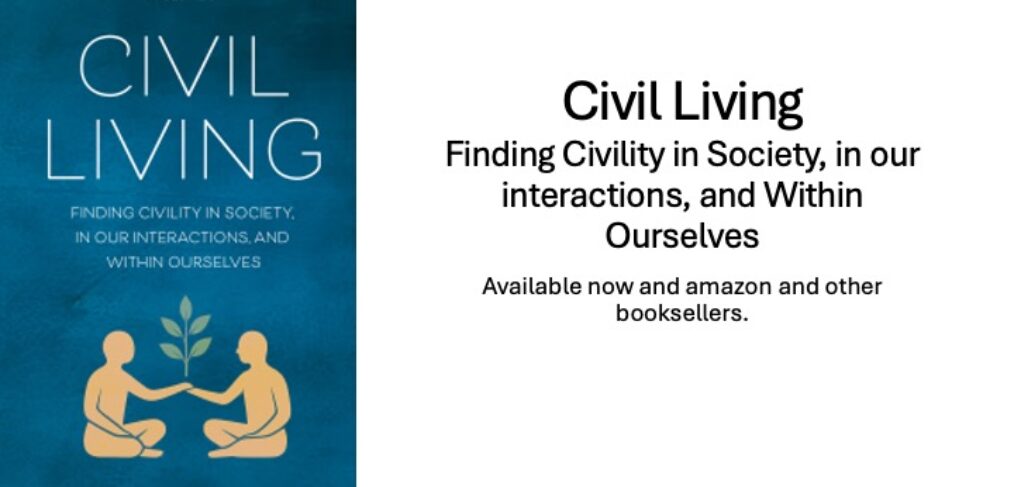
New Release: Civil Living

Today, I’m honored to share something that’s been years in the making: the publication of my book, Civil Living: Finding Civility In Society, In Our Interactions, and Within Ourselves (link). Civil Living is a series of essays that represent a deep and ongoing exploration of how we live, relate, and show up in a world that often feels anything but civil.

Read More
Dichotomies Within

Dichotomies Within—Understanding the Opposing Forces in You

Most people have parts of themselves that are hard to fathom. You might know someone who is friendly and gregarious but needs to have time to themselves. Someone might seem sympathetic and compassionate, and suddenly, you see a cruel or aggressive side. Rarely is someone’s complete makeup painted with the same stroke. That’s what makes people interesting—and hard to predict. It’s very likely the same is true for you. If you look within yourself, you will likely find parts that are incongruous with how you or others think of you. Understanding these aspects of your makeup will give you peace and help you choose a path consistent with those dichotomies.

Read More
Too much of a good thing

Too Much of a Good Thing—Keeping Balance in Your Life

Everyone has elements of their lives that they love. It might be their work, a hobby, or building wealth. But anything you are passionate about can be diminished if you do little else. Balance in life is essential. Key activities, such as health, self-care, or relationships, might be ignored if you become monomaniacal about a single activity. Like any other element of your life, the ones you love must be planned and carried out intentionally. The more you make time for activities that make you more grounded and healthy, the better you’ll be able to engage in what you love.

Read More