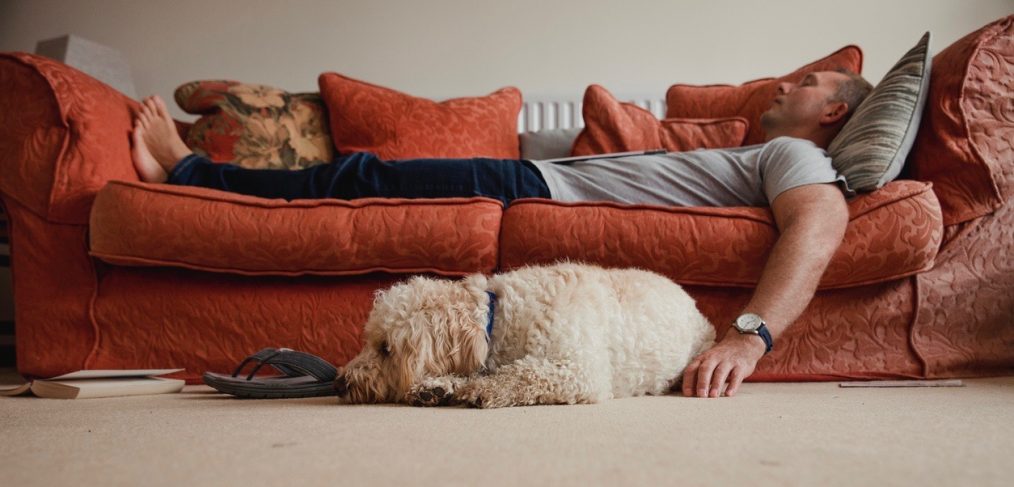
We all have those days. Days when we wake up, get our coffee, sit down, and don’t feel like doing anything else. We begin to feel guilty, but inertia is fully in control. We may struggle with the battle between our need to do nothing and our responsibilities all day long. Why does this happen? It can happen because we had a terrible night’s sleep or because we drank too much the night before. It can happen because we’re upset about something and our emotions have immobilized us. It can also happen when we’ve been stressed or overwhelmed for an extended period of time and our bodies and psyches are shutting us down to reboot and recover. Whatever the reason, we should give this feeling the space it needs. We should consider why we feel like this and learn from it. On many, if not most, of the days when we feel like this, we should succumb to the feeling and go with it. We should veg out and give ourselves fully to going into standby mode. Our bodies and minds are often wiser than we are. When they speak so forcefully, we should listen.
Our life is filled with borders—those lines, both tangible and symbolic, that delineate our lives. Some of these are real, while others are imagined. Some are immovable; others are flexible. Some are imposed upon us, while others are self-imposed. How we behave in relation to these borders can have a great impact on what kind of lives we lead and how successful we are in achieving our goals.
The notion of balance is an old one but is as important now as it has ever been. Modern life tends to move at a frenetic pace. Our professional and personal lives are equally demanding, and we are getting information, both helpful and unhelpful, at the speed of light.
We each start our day with a bottle full of mental and emotional energy—our energy juice—and it can go fast.
We use up a significant amount during our workday. For many, that’s where most of the bottle is poured. Then when we come home, we pour a bit more out—maybe while coaching our kids or engaging in their school functions. We pour a bit more out while interacting with our spouse and working through marital issues. Then we see if there’s any more left in the bottle to address day-to-day problems and issues, such as bills, doctor appointments, household maintenance, and the never-ending stream of minutiae we all have to deal with. After all this, we turn to those things that we do for ourselves. But when we pick up the bottle, there’s nothing left.
I’ve always been interested in experiences that make people explore and face their ultimate limits.
It might just be curiosity, but it might be something deeper. The opportunity to explore our ultimate limits might tell us something about ourselves that we would not have known otherwise. It gets to the core of who we are on a physical, mental, and emotional level.
An intimate knowledge of our responses to more extreme hardships and challenges would help us understand our responses to all of our challenges. It would certainly give us a boost in confidence as we face our everyday challenges.