At the moment, I am making a concerted effort to live a healthier life—less drinking, healthier eating, and consistent exercise. Under “normal” circumstances, I can do that without too much temptation—typical working days, going to bed at a consistent time, and managing my energy. But when there’s a celebratory mood, or we have people over, or during a vacation or the holidays, the temptations are much more significant, and the rationalizations are easier.
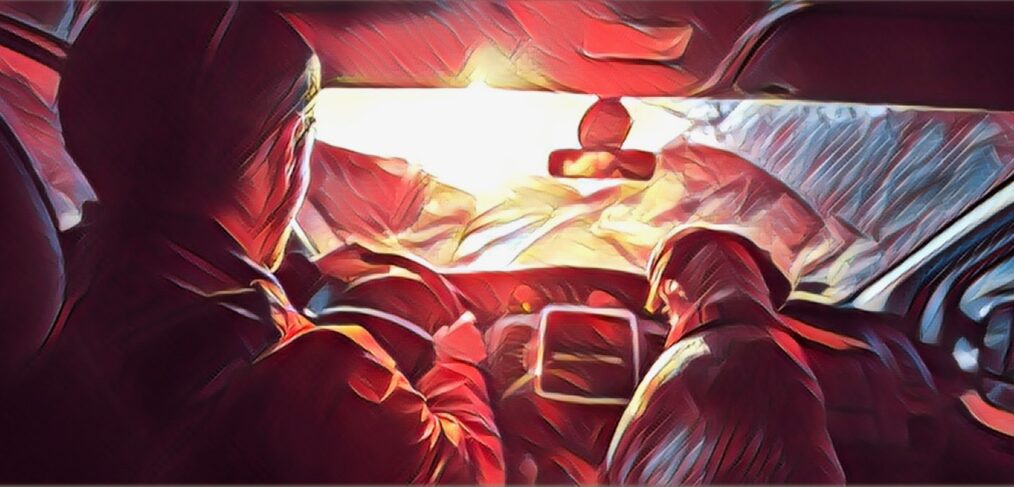
Each of us makes many choices every day. Some of them are commonplace (what will I have for breakfast?), while some are weighty (should I look for a new job?). All of our choices have consequences, some of which we know and take into account and some of which we’re unaware of or in denial about. It’s important that we understand why we make the choices we do (all of them) and the relationships between their potential consequences and our motivations. Our paths in life are driven by our motivations, and the clearer the pictures we have of what drives us down our paths, the better able we will be to sit squarely in the driver’s seat. It can be so easy to switch on cruise control and go wherever the road takes us based on what is visible through the windshield. But if we take the time to really understand where we want to go—what we want from life—and map out a route to take us there, we’ll be much more likely to make choices that are consistent with that path.
Poisons are the people, things, or situations you know are bad for you, yet they remain in your life. You likely have some poison in your life—everyone has. You may be one of the lucky ones who can recognize those situations right away and take decisive action. Or, like me, you rationalized, denied, or had an uncontrollable urge to keep them in your life. Most of these toxic elements in your life have their upside. They made you feel good in some way—at least in the short term, and that good must be intensely good because it is compelling you to live with the extreme negative aspects or consequences. The good part also may be a “potential good” or just imagined—a carrot just out of reach that never comes closer. The fundamental question is, why do you keep these poisons in your life? Why do you subject yourself to their ravages?
Do you consider yourself rebellious? There is an intensity to the word rebellion that suggests a significant and robust opposition. To me, it also indicates a solitary position—of being alone in opposition to something. From the perspective of personal identity and growth, any mindset or behavior that goes against expectations can be an act of rebellion. These may be as important as moving away from expectations that have been ingrained since childhood or as simple as a fashion statement. However, none are insignificant. When you act in a way that is true to your essential self and away from societal or personal expectations, you act rebelliously in the most healthy way. It will help you grow, find confidence, and give your life more meaning.
It all starts with something small.
Don’t use so much water when you do the dishes!
Now, I know how to do the dishes. I’ve been doing the dishes since I was seven (it was one of my childhood chores), but for the sake of argument, let’s say I’ve been doing them every other day since I was 21. That’s 6,387 times I’ve done the dishes (a conservative estimate, as I sometimes do them several times a day, or every day for stretches). I’ve never had a dishwasher. I know how I like to do them. Maybe I do run more water than some, but I also do them faster, as I’m not waiting for a trickle of water to clear off the soap. And if that’s my luxury in life, it’s really not too much to ask. There is no regional water shortage—in fact, it’s been raining like crazy. We’re paying extra for the water—estimated at an extra $6 per month—but it’s money I’m perfectly willing to spend to do the dishes my way.
If you’re of the crazy opinion that this is something fairly small to be testy about and I’m being defensive, then you’re right (it’s one of the very few things my wife and I “argue” about). But it does make me irritable. How does something so small turn into something that impacts my emotional state? Why can’t I just say “that’s the way I like to do the dishes” and be done with it? The answer is precisely because it’s so small—I don’t feel the need to have a big discussion over it, so I let it get to me. These small, inconsequential emotions become bigger emotions that impact my overall emotional state.