
There’s always a grain of truth to anything you say. It may not be in the specific words, but the emotions behind those words are likely genuine. You can’t control your feelings, but your actions are entirely in your control. The trick is discerning what actions are appropriate in different emotional contexts. Saying something you don’t mean is a common outcome of an intense emotional state. You may later look back and find it hard to believe that those words actually came out of your mouth. Rather than feeling regret and anxiety about what you said, it is healthier to explore what you were feeling at the time and, if appropriate, discuss what you said with who you said it.
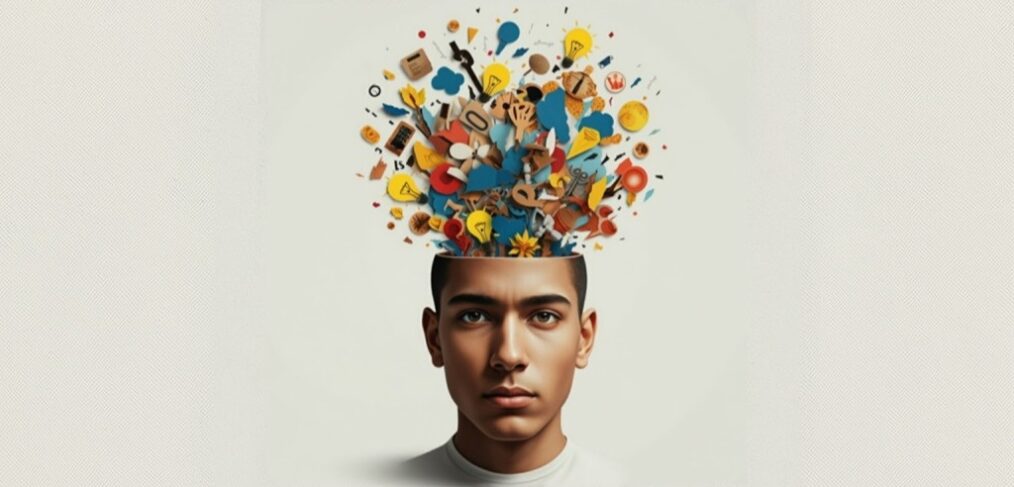
What are you thinking about… right now?
It’s a simple question, but it’s so important. Our thoughts are the content of our consciousness. They are how we process the world and our experiences. We can choose our thoughts, but only to a certain extent. Errant thoughts will always arise, and some will be unpleasant and unwelcome. Some thoughts may cause worry, sadness, or anger. The relationship between our thoughts and our emotions is direct and often uncontrollable. However, with focus and practice, we can better control our thoughts and the emotions they stir.
It’s hard to be away from those we love. We may feel longing or loss. We may even think that we aren’t a significant part of the other person’s life—that you’re not on their mind or in their heart anymore. While these feelings are natural, it’s important not to let them diminish the fact that you are your own person—independent and strong. It may not always feel that way, but each of us has an independent person inside us, needing nurturing and care—not from another person, but from ourselves. If you are always with another person, you may rely heavily on that other person for your identity and emotional state, which can lead to an unhealthy reliance on that person. This can become chronic and damaging. Some couples or friends spend a lot of time together in very healthy ways. But if you become emotionally dependent on the other person, that’s a problem.
Each of us has a vision—the ideal version of our lives.
But what you may not realize is that your overall vision is made up of your day-to-day and moment-to-moment visions. If you can make those mini-visions become real, your overall vision will take care of itself.
In this context, I’m not talking about a major life goal to accomplish or milestones to achieve. I’m talking about what you want your life to be—the ideal version of how you live, how you feel, and what you think. While this does, of course, relate to your accomplishments, it is more about your approach and outlook than about the particulars. How you engage with and interpret all of the people, circumstances, and events along your path will define both your reality and your vision. As much as it feels like many of those elements are out of your control, they’re not. It can be difficult to not let them drive your outlook, but through intentional living, it is possible.
Some people are larger than life. They seem to loom large over every interaction we have with them, not because they try to be dominating or because they are necessarily smarter or more talented than anyone else, but because they have a special presence. What is it about these people that makes them so special? They may have attractive attributes, such as intelligence or empathy, but (in my experience) they also may not. They may be successful in life, but they also may be living an “average” life—one that is not particularly accomplished or high profile. I call these people “large-souled,” meaning they have a significant presence in the universe. We may identify different people as being in this category depending on the way we interact with people. Maybe some people don’t recognize this category of people at all or mistake good looks, success, wealth, or charisma for a large soul. I’ve always felt drawn to the large-souled and have aspired to be one myself. Because the qualities of these people aren’t effable, this can be difficult.