What are we working toward as a society? In times of societal upheaval, it can be helpful to know not only what we don’t want, but what we are working toward. The utopian ideal embodies a healthy society: a world in which we all work together toward common goals, where there is no need for greed or the hoarding of wealth, and where we are at peace. Of course, there are conditions we need to overcome to begin working toward that ideal, not the least of which is that, generally, people are greedy and self-centered. We also do not all share the same goals, values, or ways of living. But what if we could find utopia within ourselves? Personal utopia can be achieved, and if enough people achieve it, it will lead toward something more.
I have trouble reading the news these days. I know I have to, and I do, but the overwhelming sense of rage, disappointment, disbelief, and despair takes its toll, and I am mentally and emotionally exhausted. The meaning and fulfillment I get from activities that nourish my soul have diminished during these extraordinary times, which increases my sadness and anger. I soldier on, knowing that these activities do help, and I lean on my belief that the direction of the country will swing again toward compassion and wisdom. But in the meantime, my existential fatigue is something I have to address. Like a medical condition, it’s something I have to take seriously and take steps to mitigate its effects.
The old story of a genie in a bottle granting three wishes might seem like a dream come true, but it isn’t obvious to most what those wishes might be or if they would make their life or the world better. Wishing for something different than what you have is a risky venture. For many, there are heartaches and challenges that a wish, if granted, might resolve, but then they would be faced with a question of the greater good. They would have to decide whether the wish should have been used for the world at large rather than fixing their own lives. Fundamentally, the idea that a change will make your life better is also questionable. Each of us makes what we can with the life we are given, and of course, more money, the absence of disease, and the removal of heartache would make anyone’s life marginally better. However, dealing with those challenges is part of life and makes us who we are.
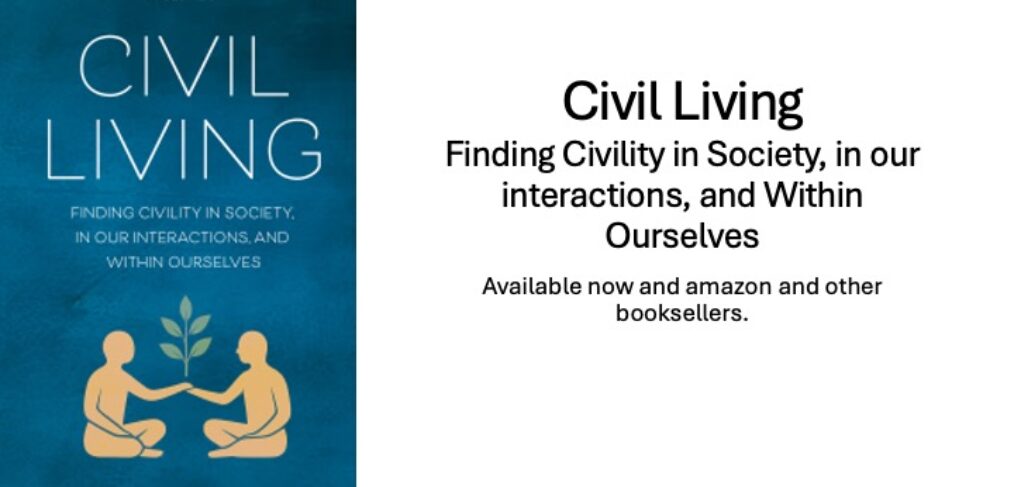
Today, I’m honored to share something that’s been years in the making: the publication of my book, Civil Living: Finding Civility In Society, In Our Interactions, and Within Ourselves (link). Civil Living is a series of essays that represent a deep and ongoing exploration of how we live, relate, and show up in a world that often feels anything but civil.
I believe in heaven and hell. They are as good (heaven) and as bad (hell) as you might imagine. But to me, they are not places but part of the human condition. We create our own heaven and/or hell inside of us and in our lives. If you have a positive, meaningful life and have a good perspective on how good your life is, you reside in heaven. If you’re petty, narcissistic, and selfish, and you view your life as one of winning and losing, you are in hell. The good news is that you have a choice of where you reside. There are people who have a hard life full of tragedy and heartache that still reside in heaven because they are able to focus on the good parts of their lives and the people who love them. There are also people who have everything they could possibly want but only see the challenges in their lives. They are living in hell by choice.