People have a lot of advice about friends these days. The old adage, “Make new friends and keep the old, one is silver, and the other is gold,” is perfectly sound, but it assumes people don’t evolve or grow apart. You may also have friends of convenience or circumstance, and you might question why they are still your friends. Some might advise you not to spend any time with people who don’t provide value or happiness in return. But of course, it’s not that simple.

Your life can take twists and turns, and no two days are the same. But at the end of the day, you are still just you, right? Yes and no. Each of us has personas we adopt depending on the context. In a professional setting, you might be more serious and no-nonsense. With your kids, you might adopt a supportive, empathetic personality. When you’re with people you love, you become more attentive and generous. But ultimately, deep down, there’s the version of you in each of these personas—and getting to know that core self is a key to living a genuine life.
What are we working toward as a society? In times of societal upheaval, it can be helpful to know not only what we don’t want, but what we are working toward. The utopian ideal embodies a healthy society: a world in which we all work together toward common goals, where there is no need for greed or the hoarding of wealth, and where we are at peace. Of course, there are conditions we need to overcome to begin working toward that ideal, not the least of which is that, generally, people are greedy and self-centered. We also do not all share the same goals, values, or ways of living. But what if we could find utopia within ourselves? Personal utopia can be achieved, and if enough people achieve it, it will lead toward something more.
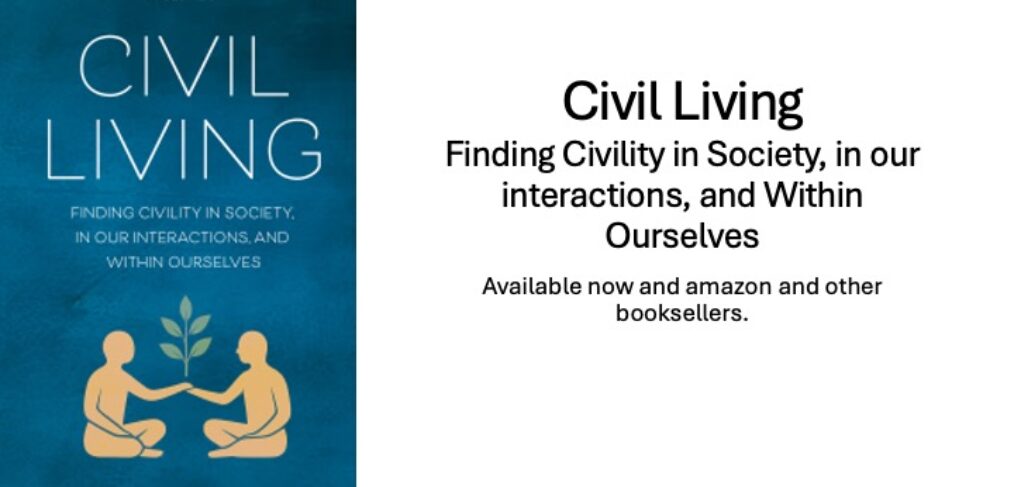
Today, I’m honored to share something that’s been years in the making: the publication of my book, Civil Living: Finding Civility In Society, In Our Interactions, and Within Ourselves (link). Civil Living is a series of essays that represent a deep and ongoing exploration of how we live, relate, and show up in a world that often feels anything but civil.
When you make close friends, especially when you’re young, they click easily and are fun and carefree. There may be drama, and some friendships won’t last, but they aren’t hard work for the most part. But as you gain years and experience, you also gain insights and opinions and become more set in your ways. You may disagree more with old friends or find certain characteristics irritating or puerile. You may even question why you’re still friends. But I’ve got news for you: people may feel that way about you, too. Long-term friendships are valuable and rare; don’t dismiss any long-term relationship as not worth the effort without serious reflection and thought.