You win some, you lose some. That’s the way it always goes, right? It’s true in many contexts, but the win-or-lose dichotomy is so ingrained in our thinking and behavior that we often overlook win-win scenarios. Not only are these possible, but in many circumstances, they represent the most logical, ethical, and mutually beneficial approach. Of course, some situations lend themselves naturally to competition. But even in a competitive environment, opportunities exist to cooperate, support others, and create outcomes where everyone benefits.

Personal growth can happen in many ways, but it is difficult to attain in isolation. Growth often occurs when we challenge ourselves, remain open to other people’s ideas and values, and explore the edges of our own comfort zones. All of these paths have an internal component, but they also involve engagement with others. To benefit fully from these experiences, you must be intentional about both the inner work and the connections that help shape it.
Life gets hectic. It’s easy to focus on the details and minutiae of your daily life and neglect the truly important aspects. People make to-do lists and schedules, and they have goals and ambitions. They plan their days around these elements and consider themselves unavailable for other possibilities. On the surface, this is fine; it’s good to be organized and manage your time well. On the other hand, it’s also possible to be too rigid. If something unrelated to your work or goals comes up, it’s easy not to give it a second thought and conclude that you have no available time.
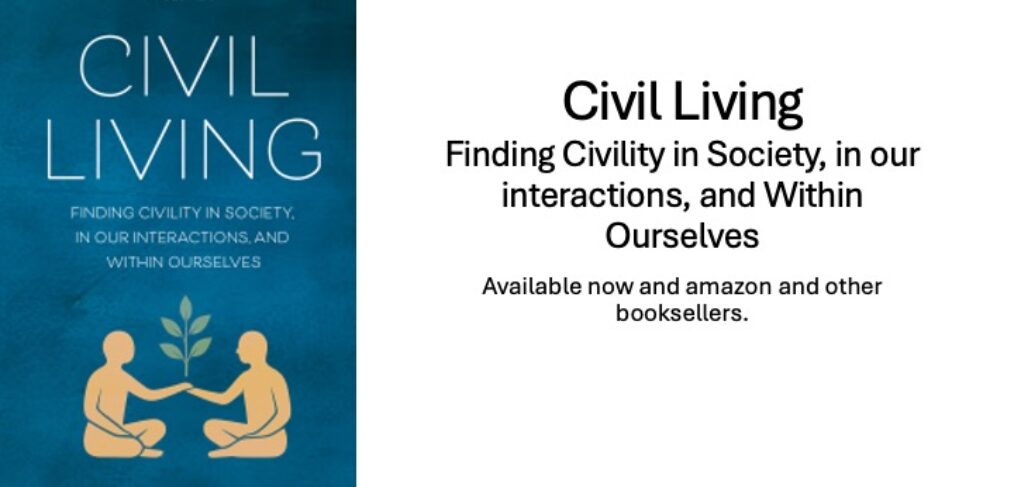
Today, I’m honored to share something that’s been years in the making: the publication of my book, Civil Living: Finding Civility In Society, In Our Interactions, and Within Ourselves (link). Civil Living is a series of essays that represent a deep and ongoing exploration of how we live, relate, and show up in a world that often feels anything but civil.
Do you have time for the important things in your life? We all go through life doing what we do, what comes up in our day, and what others ask of us. Ideally, we also engage in pursuits we’re passionate about and things we would love to do when there is time. Invariably, none of us has time to do everything we want. It can be frustrating when you can’t find the time for something, but if you live a full life, there will always be things that spill over and don’t fit in. It’s important to ensure that your activities are based on your priorities, not those dictated to you. You have the choice, even if it doesn’t always seem that way.