
The world has become a complex, busy, challenging place. It can be difficult to cut through the noise to focus on what’s truly important. It can also be hard to achieve mental and emotional clarity. Drastic changes have occurred in our world in a very short time, and people are facing unprecedented challenges, the nature of which was unknown only one hundred years ago. We’re writing the script as we’re acting in the play, and it has resulted in mental health challenges for many, if not most, people. The good news is that we can move toward clarity by acknowledging our circumstances and taking steps to address our challenges.
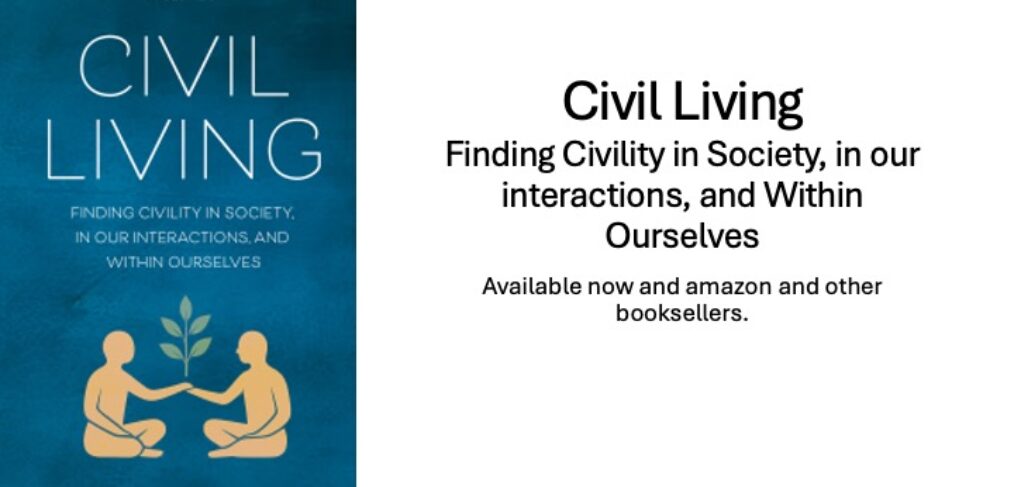
Today, I’m honored to share something that’s been years in the making: the publication of my book, Civil Living: Finding Civility In Society, In Our Interactions, and Within Ourselves (link). Civil Living is a series of essays that represent a deep and ongoing exploration of how we live, relate, and show up in a world that often feels anything but civil.
What are the ingredients of a meaningful life? The simple answer is finding something personally meaningful to you. But, of course, it’s not that simple. It’s vital to understand how endeavors are meaningful to you. What do they give you? How do they make you feel? There are several ways to consider this. One is that an activity fills you with pride and makes you feel good about yourself and how you spend your time. Another is having a positive impact on the world and making a difference. A third is discovery or developing a deeper understanding of something. A meaningful life may be related to your career, a hobby, or how you interact with people. There are many ways to find meaning in your life.
There’s always a grain of truth to anything you say. It may not be in the specific words, but the emotions behind those words are likely genuine. You can’t control your feelings, but your actions are entirely in your control. The trick is discerning what actions are appropriate in different emotional contexts. Saying something you don’t mean is a common outcome of an intense emotional state. You may later look back and find it hard to believe that those words actually came out of your mouth. Rather than feeling regret and anxiety about what you said, it is healthier to explore what you were feeling at the time and, if appropriate, discuss what you said with who you said it.
Life is a gift, but like all gifts, its value depends on the person receiving it. Most people embrace life to some extent, and others muddle through as best they can. What are the factors related to the joy of living? These are as varied as the people who possess them. Someone’s joy in life might be related to how much energy they have, how fortunate they’ve been, or the opportunities they’ve enjoyed. Enthusiasm for life can be driven by someone’s personality, courage, or curiosity and can be impacted by hardships, tragedies, or life circumstances. But whatever brings about your drive for life, it’s important to be aware of it and what factors in your life influence it.